Retribution

TW: Child Abuse, Torture, Mention of Suicide.

My first memory was of my mother putting the washcloth over my face. I think I was a little too young to realise what was happening, but I vaguely remember feeling scared. There was something about the scratchy material over my skin, or maybe the absence of light, that frightened me. I remember calling out to my mother, trying to tell her that I didn’t like it, but I’m not sure that she heard me. At least, I tell myself that she didn’t hear me. It makes what followed easier for me to digest. Of course, I know I’m lying to myself.
The water poured slowly at first, but I instinctively hated it. The washcloth quickly became saturated, and the water cascaded through it, dripping through onto my face. I tried to cry out, but the water flooded into my mouth, my nose, everything. Every time I tried to breathe, the water permeated me, seeping into my lungs, until I nearly gave up. Even at that young age, I was willing to die if it would make it stop. I don’t really remember what happened next, but my mother must have stopped, or maybe I fainted, because my next memory is of my mother holding me by the shoulders. She wasn’t gentle, her fingernails digging into my skin so hard she drew blood.
“Stay away from him,” she growled, and I remember feeling confused. I made a habit of staying away from everyone; I was a very quiet child. I preferred my own company. Other people just seemed to be such a disappointment. My family would often find me with my nose buried in a book, ignoring the world as it passed me by. My mother’s words caught me off guard until she grabbed my face hard enough to bruise.
“He is mine. Stay away from him!” Everything seemed to click into place at that. She was talking about my stepfather. I found it strange. He was simply there. I had no intention of being around him. Something about him simply felt off, and so I often avoided him. I was only a young girl, so I simply nodded, wanting nothing more than for my mother to stop. I wanted her to show me just the simplest affection, but she cast me aside, knocking me to the floor of the bathroom. I watched her leave, and I think I began to cry. I distinctly remember wondering why she didn’t love me.

I was six.

*****

From then on, my memories became more vivid and vastly more disturbing. I won’t bother you with the details, but by the time I was fourteen I had grown into a hardened girl. Each time I incurred my mother’s wrath, or that of my stepfather, I disappeared into my mind, to somewhere they would never be able to hurt me. It changed each time, but I was often alone, in a luscious forest or by the glistening sea. It worked most of the time, but there were a few disappointing times where it failed me. One such instance led to the police being called to the house, only to find nothing but a snivelling teenager and two parents who looked like the epitome of stress. I remember that my stepfather told the officers that I’d recently been diagnosed with schizophrenia, and that they were still trying to find the right dosage of medication to subdue me. About the bruises that littered my body, he said that I had done it to myself, unable to cope with the voices in my head. Since that day, I have hated the police with a passion unlike anything else. It would have been so easy for them to talk to me, question me privately, and I would have left that house and never gone back. As it was, it’d be another two years until I managed it. 

*****

I’d planned it perfectly. My parents had a habit of drinking too much before bed. They never quite managed to control themselves, normally passing out on the sofa long before the sun went down. This often left me to my own devices, and this was the only time I was ever glad of it. I remember waiting until I was sure they were asleep, then sneaking upstairs to their bedroom, holding my breath against the onslaught of stale cigarette smoke that hit me when I opened the door. It was unheard of for me to willingly enter, and I felt a small thrill run through me as I made my way to my mother’s bedside table. I knew exactly where they kept their supply of heroin, and now, it was time to use it against them.
The needles weren’t even wrapped, a fact that I’d factored into my calculations. I was only fifteen, and though my parents were both drug users, I’d never paid much attention to how the syringes fit together. I was counting on my parents to already have them assembled. It would save me a lot of trouble. 
I made my way downstairs and organised my equipment. While I’d been planning, I’d thought I would have some second thoughts, but I was pleased that my mind was calm, hyper-focused on my task. This was my one chance to escape this godforsaken place once and for all. In the past, I’d tried to run away, but it always ended with me being dragged back. Sometimes by my stepfather and sometimes by concerned neighbours. This, however, was more than an attempt. This would be my final night in this house, and if I was wrong, then it would be my final night alive.
My stepfather stirred slightly as I approached, but he didn’t wake. Of course, if he did, then the knife in my hand would suffice to deal with him, though it would be a lot messier than anticipated. I held my breath as I knelt down in front of him, reaching for his arm.
The old marks from where the needles had penetrated the skin made it easier for me to guide the syringe into the vein. I felt a wave of nausea as a droplet of blood swelled, but I forced myself to continue, pushing the plunger down and watching as the heroin emptied into his body. I felt a strange rush go through me, and my heart leapt into my throat. It pleased me. Over the years he had held me down and forced me to take a dose, and now, I was doing the same to him. It felt like poetic irony. Vindication. It felt like justice.

That was when an idea came to me, quick as a flash and holding on like an earwig. It was too late for him, of course. His breathing was already beginning to turn shallow. It wasn’t too late for my mother. If I tweaked the measurement of the dose ever so slightly, it would make her pliable. It would make her compliant. It would make her mine. I could do whatever I wanted to her, and she’d be powerless to stop me. My mind made up, I turned to her, a small grin crossing my face. As her husband gurgled next to me, I turned to the woman who had given me life. For the next week, she would be at my mercy.

*****

The week passed slowly. I only stopped because I was beginning to get bored. My mother had been easy enough to control, but she was getting more and more sluggish as the days wore on. There was also the matter of my stepfather; his corpse was beginning to smell. At some point, the neighbours would come calling, and they’d discover the little nest I’d made for myself, and I had no excuse to save myself. Rather begrudgingly, I gave my mother a final dose, taking care to leave the needle in place. I wanted this to be as painful as possible, and the irritation of the metal would surely add to that a little.
My mother had often been called beautiful by her friends. She was always the object of men’s affection, but there was no beauty in her now. Our week alone had stripped it from her. Her hair was matted, and bruises littered her face. I’d done those on the first day. I shivered, remembering the way her nose had crunched against my fist as I’d hit her. I’d been very careful to make sure that the timelines added up. The bruises would all be a week old, the same amount of time since my stepfather had died of an overdose. The water in her lungs from the torture would be gone, and any lesions the coroner would find would be attributed to decades of chainsmoking. The cigarette burns were something I’d say she did to herself, as were the cuts. As far as anyone else would know, she simply couldn’t deal with her husband’s death and, being so high, she hadn’t had the forethought to call an ambulance.
I put her on the sofa next to him, and she stirred, her eyes flickering open and finding my face. I enjoyed the spark of fear that ignited there. It made me feel powerful. I had made sure to keep her dosed with the drug, but only enough that she couldn’t fight back while I was having my fun. I wanted her to feel every little thing I did to her. Her gurgling screams had filled me with joy, but now it was just pathetic.
I grabbed the can beside me and threw it at her, relishing the thud as it hit her head. She whimpered, too drugged to do much else, and I grabbed the can again, my heart pounding in my ears. This is what I’d been fantasising about for years, and it was finally happening.
The lighter fluid dripped out slowly. I made sure not to add so much as to arouse suspicion, but still enough to set her ablaze. I tossed the can to the side and took the cigarette from behind my ear, sliding it between her lips and raising the lighter to her hand. I’d spent a good amount of time practising this, using her as my dummy to ensure that I knew exactly what to do.
I took a breath to steady my nerves, wrapping her fingers around the lighter, and then I sparked it. Almost instantly, the flames spread, latching onto the lighter fluid and setting her lap aflame. The heroin did nothing to stop her howls as it spread, across her stomach and up her chest towards her face. I dropped the lighter into the flames and scurried backward, nervous. Fire is a very unpredictable thing, and I had no idea if I’d have time to escape. Luckily, it seemed focused on my mother, and I had time to watch as the flames engulfed her, the crackling sound filling me with a sense of relief. There was no way she’d be able to survive. 
I waited a few seconds more, and then began to scream, almost in time with the fire alarm as it roared into life. I turned on my heel and made sure to fall, hitting my head on the edge of the coffee table in front of the sofa; it wouldn’t do for me to come out of this without a scratch. My hearing became muted and I dragged myself up, running toward the door, still screaming. I reached the door in record time, and began banging on it with all my might. I’d made sure my mother had the keys in her pocket. Once again, I had to make my escape look believable.
The frosted glass in the door soon darkened, and I saw a humanoid shape on the other side.
“Help me!” I screamed, the heat of the fire beginning to reach me. The person on the other side seemed to realise I was there, and there were shouts for help. Soon, someone was trying to kick the door open, and someone else was screaming for the fire brigade to be called. It took a few minutes, but eventually the door swung open. Not a moment too soon, in my opinion – the fire had begun to lap at the back of my legs, sending a searing pain through me. I fell onto the pavement, and someone dragged me away from the threshold, into the cool afternoon air.
When we were a distance away from the house, someone rushed toward me. I remember green uniforms, and I think they were paramedics. I began to cry, starting the greatest performance of my life.
“My mother’s still inside!” I bawled, making a show of trying to get up, but strong hands pushed me back down to the floor, whispering soothing words of comfort to me. “Please! You have to help her!” Each of my attempts to rise were thwarted, and soon the fire engine arrived, firemen pouring out and readying the hoses to tackle the flames. I risked a look at the house I’d grown up in.
The windows had cracked from the heat, and the fire had begun to rise. I could see thick black smoke pouring from my bedroom window at the front of the house on the second floor. Good. If it had made it that far, it means that my mother was truly gone. Let it all burn, I remember thinking, This place was Hell, it may as well burn like it.

*****

The fire – and my miraculous escape – was in the news for about three weeks before interest fizzled. I had laid in my hospital bed, watching the news coverage until a nurse had turned it off, not wanting it to upset me. From what I could gather, the story I had told the police had become the official one. My mother, upon the death of her husband by heroin overdose, had gone crazy. She’d refused to call for help, instead forcing her daughter to remain locked in her room for a week before finally letting her out. She’d made me watch as she’d doused herself in fluid and set herself ablaze, stating that she didn’t want to live if her love wasn’t there.
I wasn’t expecting it to be this easy. Of course, their drug use was an open secret in the neighbourhood. Most of their supply came from the dealers that wandered the street. But still, it surprised me that nobody bothered to question my story. I was expecting at least a little suspicion, and I found myself slightly disappointed that the elegant solutions I had thought of wouldn’t be needed. Oh, well. There would most likely be another time where they could be used, if I ever found myself in a dangerous situation. For now, my only job was to lay in bed and play the grieving daughter, distraught at the loss of my parents. Almost inconsolable. That was the hardest part. I didn’t care that they were dead, in fact I was glad of it. I had orchestrated it. Throughout their investigation, police officers had come to speak with me, and I had told them everything that had happened to me in that house. The doctors told them that I probably had Stockholm Syndrome, and that’s why I was so saddened by the fire, and everyone believed it.
My victory was like honey on my tongue. Sweet, and a little moreish. When I think back, I believe that I was always destined to become what I am. My entire existence had revolved around simply surviving that I couldn’t take it anymore. From this point on, I would be a fighter. 

*****

Years passed without incident. As soon as I was medically cleared, I left the hospital. I changed my name and dyed my hair, wanting to disappear as completely as possible. The girl I had been had died in that house, and I was determined that she was never coming back. I went to university, and then completed my Masters degree. Eventually I got my PhD in child psychology, and was proud of myself. I was a completely different person. My mother had always said that I was worthless, that I’d never amount to anything. I know it sounds a little cliche, but I’d spent so long hearing it that I’d started to believe it. I was glad that I’d proven her wrong, even if she wasn’t alive to see it. I’d always been a rather spiteful child, and apparently I was a spiteful adult too, holding onto grudges against the long dead out of nothing but principle.
After my studies, I decided to spend a couple of years traveling. I’d always wanted to go on holiday when I was a child, but I’d always been told that we couldn’t afford it. Thanks to the money from my stepfather’s life insurance, that had passed to me as his only remaining family, I could now. I went all across the world. India. The UK. Brazil. Australia. I had a wonderful time, and I almost didn’t want to come back. But I knew that I had to make something of my life. I had to settle down and open my own practice, to try and help people. I wanted to be the protector that I never had. It was the least I could do. After all, at that time, I still believed, however naively, that I would never harm another person the way I’d been harmed. I wanted to be good. To do good. I wanted to leave a legacy for myself that would ensure I’d be remembered for years after my death. 

I called my practice ‘The Fern Clinic’, using the fake name I’d chosen for myself. Even years later, well into my thirties, I still got a rush of pride every time I saw the sign with my name on it. I quickly built a client base, mainly young, spoiled children that the parents needed help with. Occasionally, I’d get a difficult one, where I had no choice but to recommend a child be sectioned for their own safety. The parents always looked at me with teary eyes, asking me if I was sure there was nothing I could do. I hate to say it, but some children are beyond help. I knew the signs. I had been that child. Anyone willing to kill a cat – or their parents, for that matter – were better off seeking help from someone more able to help them.

The Fern Clinic had just celebrated its ten year anniversary when I began to struggle with my patients. Not in a typical sense, but I was starting to lose my grip. I had tried so hard to help them, and I had successfully helped remove many children from their abusive families, but it wasn’t enough anymore. 
It started when I was walking down the street. I’d been looking at my phone, messaging my assistant about an upcoming court appearance for one of my clients, when something made me look up. At first, I couldn’t see anything, but then my eyes honed in on a woman on the other side of the street. It took a moment for me to place her in my memory, but I remembered quickly. Two years ago, her son had been placed in foster care after a lengthy court case. My testimony had been the majority of the evidence. Everything the boy had told me in our sessions had come to light, and he was removed. From what his foster parents told me, he was doing a lot better now, and up until now, I’d been happy with that knowledge.
Seeing his birth mother startled me, but my shock soon turned to disgust as she turned, the sides of her coat billowing away from her body in the wind, revealing the swollen belly. The disgust turned to anger, then to a white hot rage that threatened to overtake me. No matter how many children I saved, there would always be more. Even if their first child, or their second, or third, was taken away from them, parents would keep having more, knowing that they would more than likely share the same fate as the elder children. I picked up my pace, frightened by the thoughts running through my head, and I reached the clinic in record time, having almost ran there.
Since then, the thoughts continued to plague me. If only someone could make sure that those kinds of parents couldn’t have more children. Couldn’t subject more innocent souls to the torture so many of us had suffered from the people who were meant to protect us. I tried to ignore it. I promise I did. I tried so hard to rid myself of them, checking myself into weekly therapy sessions with a reputable councillor, though I never told her what I was thinking. I could hardly tell her that I wished death on the abusers. That I wanted someone to take matters into their own hands and take their lives from them before they could inflict any more damage. So instead, I told her the stress my job was beginning to take on me. The way that, even when it was for the child’s own good, I was the one who was blamed for changing their life. Not thanked. Blamed. I didn’t know how much longer I could continue like this. The thought did strike me that maybe it’d be best if I closed the Fern Clinic, but I have always been a stubborn person. I started my career with the mission of helping as many children as possible. Perhaps, instead of closing the clinic, it was time for me to change my tactics.

*****

It all came to a head on a Wednesday. I’d been seeing a young girl for weekly sessions for a while, and my heart ached each time I saw her name in my diary. It wasn’t the worst case I’d ever seen. As far as I could tell, there was no need for a court case, no need for her to be removed. But there were so many similarities between us that I couldn’t help but think about my childhood. The snide comments my mother had always made about me.
We were sitting side by side, and I was watching her draw. It was one of the few things that comforted her in our sessions. I was glad she had a hobby, though according to her, her mother would always take her drawings. We’d only had a couple of sessions before I bought a lockbox for her, leaving it on the shelf in my office.
I watched as her drawing came to life, and my blood ran cold. I stared down at the paper, of the crude drawing of a young girl with a noose around her neck. The resemblance was uncanny, and I knew that this was how the client felt. I pursed my lips and asked if this is what she thought of, and she nodded slowly, head bent, tears in her eyes. I gave a shuddering breath and wrapped her in a hug, trying desperately to quell the white-hot rage burning in my chest.
When the session was over, I barely looked at her mother, even as she berated the girl for struggling to put her coat on. I kept my eyes down and spoke in short, clipped sentences. In that moment, I didn’t trust myself. I didn’t know what I was capable of doing if I caught her eye. I watched as she ushered her daughter out of the waiting room, and something inside me snapped. I felt a flare of anger and then it calmed. It became still in my chest, and I nodded to my assistant before closing the door to my office. The drawing was still on the table, and I picked it up, glaring at it. The girl was only nine. She shouldn’t feel like this. She shouldn’t have thoughts of ending it all simply because her mother didn’t love her enough. I felt my anger become finer, more calculated, and I knew what I had to do.

*****

It was a relatively simple plan. Thanks to the contact information I was required to collect from the families of my clients, I had a long list of their addresses, and so I could easily determine which routes the parents would take if I called them to my office to discuss their children’s development and progress. Then, it was a matter of watching them. Only for a few days, and never in person. Along the routes, I placed cameras, linked back to the monitor in my office. I watched as they drove to appointments, and I knew that this would be easier than I anticipated. I noticed that most people would take the same route each time. People are such pathetic beings, sticking to what is familiar. They don’t seem to realise how often their routines could lead to their end. 
I had called the client’s mother, asking for an appointment without the girl, to discuss her progress and what I believed the next steps would be. I told her that I was on the other side of town, but if she wouldn’t mind waiting for me at the office, I would be there in an hour. She seemed hesitant, claiming that her oldest son had a football game she had to attend, but she changed her mind when I told her that her daughter had been exhibiting some troubling signs. Of course, she didn’t really care about her daughter. She only cared about her reputation. Her family was wealthy, rubbing shoulders with the ‘elite’ of the city, and so of course it wouldn’t do for her to have a mentally ill daughter. She told me that she would leave immediately, and I hung up the call, sliding the phone back into my pocket and stepping out of the car.

Even now, I think I did a good job. I’d bought a prepaid phone and used a friend to rent a car for the day, so that nothing could be traced back to me. I’d parked the car by an underpass, out of view of the road. I’d chosen the area easily. It was a run down part of town, and not even vagrants would come here. The roads were littered in trash, which made the spike strip easy to conceal.
I only waited for about fifteen minutes before the mother’s Mercedes tore past, running straight over the strip and puncturing the left front tire. She skidded to a halt and jumped from the driver’s seat, running around the car to inspect the damage. I was already waiting in the car, idling the engine. I pulled out of the hiding spot and onto the road, taking care to drive around the spikes. I pulled up next to her and got out, but she was too busy fretting over the busted tire to pay me any attention.
By the time she looked up and saw me, the chloroform soaked rag was already over her mouth, and I finally let myself look at her. I remember that it displeased me that she looked scared; her daughter spent so much of her life in fear because of this woman. She wasn’t entitled to the same emotion.
Despite what people think, chloroform doesn’t work immediately. It takes about five minutes for the target (I refuse to call them victims) to collapse, and I knew that she was likely to fight back. Rich women often fought back. They think that they are untouchable, and when faced with danger, they will either throw someone else in its path or try to get a lawsuit out of it. I did the only thing I could think of to stop her from fighting. I kicked my foot out and sent her flying to the ground. She hit her head hard enough that her eyes fluttered closed and she slumped in a pile, designer clothes askew. I paused for a moment, but she didn’t move. Slowly, I picked her up and spotted the small patch of blood on the ground where she’d fallen. Good. Now they’d know she was in danger. 
Getting her into the rental car was easy. I’d popped the trunk open before I’d approached her, and all I had to do was throw her in. I took one last lingering look at her before slamming the trunk closed, pleased with myself.

*****

I rarely spoke while I worked. I knew that the silence would drive them crazy. Unlike what they did to their children, my torture was purely physical. First came the washcloth. Then the fingernails. Then the toes. The beatings. The burnings. The brandings. I enjoyed every single second of it. It made me feel powerful. I felt like a hero. I knew that nobody would understand, but this was the only way their children would be safe from their tyranny. If I let them live, they’d simply go back to their families and take their anger and frustration out on their children. In my mind, the only good abuser is a dead abuser.
The first one, the woman in the Mercedes, was the sweetest. Even all these years later, I can still remember her pleading. Her weak words begging me to let her go. I remember that she told me her family would pay. They’d make me rich. I remember the terrified sob that escaped her when I laughed. I wasn’t doing this for money. I was doing this for justice. For vengeance. Partly, I did it for the thrill. There was something about taking the power away from powerful people that filled me with a delight I couldn’t quite explain. It reminded me of being that small child again, locking my mother in the house and doing as I pleased with her.
She died too quickly. It only took a couple of days for her to pass, and it enraged me. She didn’t have the decency to hang on a little longer, after everything she’d done to her daughter. I find it silly now, how angry I was at her. I’d only killed twice before. I was a novice. Given time, though, I believed I had the makings of one of the greats. None of those pathetic little men who kill women or children. The real greats. People with a mission, who killed out of righteousness. Those who killed the right people for the right reasons.
After she died, I kept her for a while. I wanted to cut her apart and find out what was really inside humans. What could I realistically do to people before they died? How long could they survive my company? Dead wasn’t as good as alive, but I found out a lot, and I used it to my advantage. When I was done, I threw her body in a ravine in another state. To this day, I don’t think they’ve found her, although I told them exactly where she is. Oh, well. Perhaps one day they’ll find her, and they’ll think of me again.

*****

For nineteen years, I continued my work. When I felt I had exhausted an area, I moved. Always across state lines. Never in the same place twice. Soon, there were thirty Fern Clinics, scattered across the country. For the most part, they were run by other people, but I remained the one in charge. Of course, I had to fund it all myself, and I had no issue doing so. At this point in my career, I had written a couple of books to help children deal with their emotions, and the royalties paid for the clinics, as well as the houses I bought. The clients also helped. I always found it strange how many targets paid the woman who would eventually stop them. I happily took their money. I found it funny that they were funding their own deaths.
I bought houses, never more than two in each state. I made sure all of them had basements, and I did all of the necessary renovations myself; there was no need to involve contractors and builders. After all, some of my equipment was sure to raise some questions. I spent months on each house, creating my workspace exactly the way I wanted it and then, and only then, would I begin the hunt.

I think that was one of my favourite parts. For example, in Arizona I treated a boy who didn’t speak. I tried for many sessions to get through to him, but he refused to talk to me. In a meeting with his parents, his father sneezed, and the boy flinched and whimpered. The father glared at him with malice in his eyes and I knew that he’d be next. The fact that the boy flinched told me everything I needed to know. In Texas, a mother routinely forgot to pick her son up from our sessions. When she finally came, she was filled with stories about her day with her two younger daughters, not even glancing in her youngest child’s direction. In North Carolina, there was an aunt who was disturbingly possessive of her husband, blaming her young niece for his wandering eye. To my knowledge, the man had no interest in the young girl, but his wife refused to believe him. The bruises showed on the child’s skin well enough that I knew exactly what was happening, even if the girl didn’t tell me.
Of course, not everyone was a suitable target. If all of my clients’ parents and caregivers began to disappear, suspicion would begin to arise. I knew that eventually I would be caught, but I wanted to have as much fun as possible before that happened. I wouldn’t target the pregnant or the elderly. No. That isn’t entirely accurate. In LA, there was a man, in his seventies, that fostered children. I ended up shooting him in his home. A single bullet to the skull. He deserved far more than that for what he did. I still have nightmares about him. The police came to my office afterwards to tell me that the contact information for the fourteen children in his care would be changed, and they were all placed with much better people.
Many parents would become the targets of legal battles, my testimony and my vow that the children would be better off in other families being the cornerstone of the case. If I think about it, I think that may be why it took so long for the police to find me; I was a renowned child psychologist. I had helped the police on many occasions, and not just in court. Sometimes, if I was in town, I was called upon to speak to children who had been victims, or witnessed a crime. I’m not sure why, but children seemed to trust me over everyone else. Perhaps they sensed that I could save them. They told me everything they had seen or been through, and the police were always happy with the results. If ever the investigation into the missing parents came close to me, they were hesitant to accuse me. They would simply come to me to ask questions, and then move on to other avenues of investigation. I realised how lucky I was. They had no idea that the person they were seeking was right in front of them. I think it helped that by this point, I was in my early fifties, my hair just starting to gray. I dressed in simple skirts and sweaters, trying to exude an energy that made me seem like a kindly grandmother and, shockingly, it worked. When anyone looked at me, they didn’t see a threat. They didn’t see someone who was capable of the horrific things the killer was doing. 

I remember when they found the first body. And the second. And the third. At first, there seemed to be no correlation between them. Different genders. Different races. Different ages. It seemed random. But slowly, they began to figure it out. When they did, I would lay low for a while, stopping my hunt until the trail was cold. I was very careful.

*****

They caught me when I was sixty-five. Apparently I’d done a bad job with the sound-proofing in the basement in Oklahoma. The man I had, a lowlife who had beaten all three of his children, had been screaming for hours when the police burst in, their weapons drawn. I hadn’t fought. I’d simply put down my tweezers and raised my hands above my head. When they handcuffed me, I relished the pain. When they guided me out into the street, I held my head high, knowing that what I had done was right. For most of my life, my purpose had been to help children. I finally felt that I had helped enough. At this point, even if I was caught, the Fern Clinic had grown to three hundred buildings and seven hundred qualified psychologists. I had put a couple million in a bank account to fund them after my arrest, and I knew that my mission would continue, one way or the other. Besides, it was starting to get difficult. As I aged, it got harder to maneuver the targets. It got harder to subdue them. I noticed my hands shaking more often. I knew it was time. For the first time in my life, I felt sated.

I told them about all seventy-eight targets. I gave them the addresses of all of my houses. I gave them the locations of some (not all) of the bodies. When I was done, the detective who was interrogating me looked like he was going to be sick. He wiped the sweat from his brow and demanded I tell him where the rest of the ‘victims’ were. I refused. Some things would only be for me and my memories.
The trial was quick. It helped that I confessed, shocking my lawyers when I went into explicit detail about my exploits. Women in the court turned pale, and the men looked enraged, though they knew they couldn’t hurt me. I was found guilty on all counts, and sentenced to death. I was transferred to a maximum security facility where I would spend the rest of my days. I didn’t mind. It might be nice to just… relax for a while before my time came. After all, I had been extremely busy for the last half of my life. 

*****

It was said that they had to build a new ‘death chamber’ for me. Not because they were planning to kill me in a horrible way, but because there were so many people that wanted to watch me die that there simply wasn’t enough room for them all. I found it amusing. In truth, I was a little intrigued. Who would travel all the way to Washington to watch an old woman die?
I got my answer when they led me into the injection room. Though their faces had changed with age, I could still recognize my old clients. A few of them looked angry, and I couldn’t blame them. I’d taken a parent from them, ripped their lives away like they were nothing. Most of them, however, looked sad. I recognized the girl whose mother had driven the Mercedes. She held a tissue in her hand, and her tears flowed freely.
As far as I was aware, she had tried to have me freed. A lot of my old clients had. They impassioned the courts, saying that in some bizarre way, I had saved their lives. It was useless, of course. I’d killed too many. Taken too many lives to ever be released. It was alright, though. They had tried, and it meant a lot to me. To know that they didn’t blame me, that they understood why I killed, that was all I wanted.
As the guards strapped me to the bed and the doctor prepared the injection, I watched the children. They were all older now, but I only saw the children they had been. The mute boy was among them, arguing with a guard in a last ditch attempt to save my life. The drawing girl sobbed openly. One of the old man’s foster children sat with his arms folded, almost seeming bored by the whole affair.
As the doctor approached, someone asked if I had any last words, and I thought for a long moment before I nodded. As the needle entered my arm, I looked at my children, because they were mine. I gave a small smile, and as the poison flooded into my bloodstream, I spoke.
“You are all worth more than they thought. Don’t cry for me. I finally have my retribution.”

AUTHOR’S NOTE: I’m back! Thank you for being patient with me while I’ve been gone. Between work and health issues, I haven’t been able to write much, but I finally have time. I thought that to kick things off again, I would post a rewrite of my university dissertation. I lost the original copy, so this version is purely from my memory. Parts have been tweaked and honed, and more has been added. Thank you for taking the time to read it. If you have any comments or questions, feel free to comment on this post or reach out on social media!

She Is A Haunting

I would like to begin by apologising; I haven’t made a post in a few weeks. I got a full time job, and figuring out how to balance this blog, my writing, and life in general with work isn’t easy for me, though I do hope to get better at this in the next few weeks. Thankfully, today I have a day off, so I will be writing a couple of posts and scheduling them to automatically go live. Now that I’ve explained, let’s get into the review.

*****

This house eats and is eaten.

This summer, Jade Nguyen has one goal: to survive living a lie with her sister and their estranged dad while he fixes up a decaying colonial house in Vietnam. If she can be straight enough, Vietnamese enough, American enough, then college and freedom will be hers.

But the house has other plans. Dead bugs line its windowsills and its gardens grow monstrous blooms. Then the ghost of a beautiful bride gives Jade a cryptic warning: DON’T EAT.

With the help of rebellious local girl Florence, Jade is determined to prove the house is haunted, and that it won’t rest until it consumed her family completely.

*****

I found this book completely by accident. I was shopping in Gay’s the Word in London (one of my favourite places) and I picked it up. I’ve struggled to find good sapphic horror in the past (especially that isn’t ‘dark romance’ or ‘spicy’), so I was so excited when I read the back of the book. I tore through it on the bus to work in about three days. I would like to apologise (again) for the lack of diacritical marks above the names of the Vietnamese places; I have no idea how to add them on this website. The names will be written with an asterisk after them so you know that this isn’t how they’d normally be written.

‘She Is A Haunting’ follows seventeen year old Jade as she travels to Vietnam for the first time. Both of her parents were born there, but she herself had never been before. She first travels to Saigon with her mother, sister and brother, and then her sister and her fly to visit their estranged father in Da Lat*, where he is renovating a French colonial hotel that he hopes to turn into a hotel.

The reason for the visit is simple: Jade wants her father’s money to pay for college. She has watched her mother struggle to provide for her family for years, and refuses to let her mother pick up more hours at work to pay the fees. Her father has agreed to finance her first year of college if she visits him – the first time she’ll see him since he left his family years ago. And so, Jade finds herself taking up residence in the house (called Nha Hoa*) alongside her father and her younger sister, Lily.

The house was first built by French colonizers, and it is a grand house. Trang Thanh Tran’s descriptions of the house made it easy for me to imagine what it looked like, and I found myself entranced. At first, Nha Hoa* seems like an idyllic house, steeped in potential and nestled within the forests of Da Lat*, but Jade soon learns that looks can be misleading.

When she first enters her room for the next five weeks, she notices a cacophony of dead bugs littering the windowsill. She is disgusted, but she simply explains this by blaming her father; she still hasn’t forgiven him for leaving, and finds any reason to blame him for… well, everything. From the start, the reader is aware of the strained (or non-existent) family dynamic, but that is not what I’m most excited to speak about it this review.

Things pretty much take a turn for the worse very quickly. While there are strange things happening and strange feelings that Jade has, the first real sign of a haunting comes when Jade wakes up in the middle of the night and bumps into a woman in the kitchen. At first, she thinks her father is simply bringing people home, but she soon realizes that this isn’t the case when the woman turns to her. Jade realizes that she’s dreaming, but then the woman speaks to her. Two words: “Dung an*“. Don’t eat. The woman holds her hands out to Jade, revealing a squirming mass of maggots on her palms, and it only gets worse from here. Jade flees back to her room, hoping against hope that it was nothing more than a dream and knowing, somewhere deep down, that she was wide awake.

From here, the plot moves quickly, with the introduction of more characters including local Vietnamese girl Florence, and Alma and Thomas, a white couple who have essentially funded Ba’s (Jade’s father’s) renovation of Nha Hoa*. I personally liked the introduction of Alma, simply because when she was talking about her dissertation topic (the founding of French Indochina), Jade states that she “has a degree in colonization”. This bit made me laugh maybe more than it should have.

‘She Is A Haunting’ is filled to the brim with gross descriptions (I wouldn’t necessarily call it ‘gore’). For me, it was expertly done. I found myself slightly queasy in parts, which is exactly the kind of reaction I want from my horror books. The most disgusting part that had me muttering to myself came when Jade was dreaming.

The ghost she’d seen in the kitchen (who’s name is Cam, as Jade learned) has been showing her memories from her own life. Cam seems as though she wants to help Jade figure out what’s going on in Nha Hoa*, and she shows Jade the former owner of the house, Frenchwoman Marion Dumont. Marion suffered with agoraphobia when she was alive, and is described as evil, cruel, and insanely racist, calling the Vietnamese characters “little rat”. The reader immediately hates her (as they should), but soon learns that Marion’s agoraphobia doesn’t stop when she’s dead. She remains in the house, incensed that her house has been overrun by the people whose country it was built in.

She appears before Jade in the middle of the night, disguising herself as Cam (who Jade has a strange kind of crush on) before revealing herself. She presses her hand down on Jade’s neck, and Jade realizes that she’s awake. She begins to panic as Marion’s body moves away. The only thing is… Marion’s head doesn’t move. Instead, her neck elongates, taking on the same kind of texture as taffy (the author’s choice of words). While the book is chock full of unsettling descriptions, this is by far my favourite. It is so visceral and easy to imagine that I found myself recoiling, but yet unable to stop reading.

Another part of the book that I really enjoyed comes in the form of small ‘mini-chapters’. Each couple of chapters, there is a small half page of writing, titled with the name of an organ/part of the body. These are: Mouth, kidney, appendix, eye, brain, dermis, liver, larynx, marrow, tendon, tongue, stomach, and heart. These sections kept me reading; I wanted to know what the next body part would be. These sections are written in a completely different way from the rest of the book, and I found it intriguing, although it took me entirely too long to realize that these parts were written from the POV of the house itself.

If I had one issue with this book, it would be that the ‘finale’ seems a little rushed. We spend so much time learning about the history of the house for the finale to last two (short) chapters and then culminate in the characters leaving the house to rot. While I did enjoy the ending, it could have done with a little more.

I know that ‘She Is A Haunting’ only has a 3.41 rating on Goodreads, but for me, this book is awarded 5 stars. The horror elements of the book are very well done, and I found the plot captivating and genuinely well written. I recommend picking up a copy if you also like creepy, gross, sapphic books.

If you have any recommendations for books, please get in touch with me on Instagram (@thetaysmitheffect) or Twitter (@taysmitheffect). I should probably be reading my physical TBR, but I’m always in search of new and exciting books to add to my growing list of 5 star reads. I’m looking for horror, and preferably sapphic books, but this isn’t a necessity.

Buy it here:

Waterstones

Barnes and Noble

Gideon the Ninth

The Emperor needs Necromancers.
The Ninth Necromancer needs a swordswoman.
Gideon has a sword, some dirty magazines, and no more time for undead nonsense.

Brought up by unfriendly, ossifying nuns, ancient retainers, and countless skeletons, Gideon is ready to abandon a life of servitude and an afterlife as a reanimated corpse. She packs up her sword, her shoes, and her dirty magazines, and prepares to launch her daring escape.

Harrowhark Nonagesimus, Reverend Daughter of the Ninth House and bone witch extraordinaire, has been summoned into action. The Emperor has invited the heirs to each of his loyal Houses to a deadly trial of wits and skill. If Harrowhark succeeds she will become an immortal, all-powerful servant of the Resurrection, but no necromancer can ascend without their cavalier. Without Gideon’s sword, Harrow will fail, and the Ninth House will die.

Of course, some things are better left dead.

*****

This isn’t going to have a happy ending, is it?

I’ve had my copy of ‘Gideon the Ninth’ for years, but I always put off reading it. I’m not entirely sure why. Perhaps I just wasn’t ready for lesbian necromancers exploring a haunted gothic castle in space. Or perhaps I knew that this book (and probably series) would completely break me. Now that I’ve finally read it, I think it might have been the latter.

When we first meet Gideon Nav and Harrowhark Nonagesimus, they hate each other. Gideon is trying to escape from the Ninth House, and Harrow is intent on stopping her. It’s unclear at first why they hate each other, but as readers, we get to see their relationship progress in a beautiful, artful way. For me, this book is the epitome of “enemies to lovers”. The two women go from being willing to kill each other to get what they want, to Harrow telling Gideon: “I am undone without you.” I have to confess that that one line broke me a little. But what broke me even more was the pool scene (I’ll speak about this later).
Gideon is trying to escape, to reach the Cohort and fight on the front lines. Even after reading the book, I’m still not sure what the Cohort is fighting, but that doesn’t matter in relation to the plot and I’m sure that at some point, the rest of the books will delve into this. Gideon is waiting for a shuttle that will take her far away from the Ninth House when she’s accosted by Harrow, who refuses to let her leave. Instead, she dangles Gideon’s freedom in front of her, telling the other woman that if she truly wants to leave, Harrow will let her, as long as Gideon does something for her first.
The Emperor has invited the heirs of the Nine Houses to undertake a series of tasks. The ‘winner’ will be granted immortality and power as one of his Lyctors, but the heirs cannot compete without their cavaliers. For Harrow, this is a problem; her cavalier, Ortus, has fled from the Ninth House, and she has no choice but to turn to Gideon, a skilled swordswoman. She tells Gideon that, if she accompanies Harrow, Gideon can have her freedom. She can go wherever she wants. Do whatever she wants. But Gideon doesn’t trust her. After a lot of thought, however, she sees no choice but to do what Harrow asks.

The two journey across space to the First House, home of the King Undying and the Necrolord Prime. There, they meet the heirs and cavaliers of the other Eight Houses, including Palamedes Sextus and Camilla Hect from the Sixth House, and Coronabeth and Ianthe Tridentarius from the Third House. They’re welcomed by a strange little man known only as Teacher, and the cavaliers are all gifted a key ring, the purpose of which is at first unknown.
For a lot of the first half of the book, Harrowhark is not there. She leaves Gideon to her own devices, and Gideon loves this. The only catch: Gideon cannot talk to anyone. Harrow has ordered her to fake a vow of silence. This, however, does not stop her from making friends… and enemies. The heir of the Seventh House, Dulcinea Septimus, takes a shine to Gideon, while the cavalier of the Third House, Naberius Tern, hates her. At first, I was enjoying the relationships that were being formed between the Houses, but I wasn’t prepared for what was going to happen.

Gideon finds Harrowhark’s body in a facility under the tower of the First House. Of course, Harrowhark isn’t dead; she’s a necromancer, after all. But Gideon slowly learns from her that the trials of the Emperor are more dangerous than any of them originally thought, and things get even more dangerous when Magnus Quinn and his necromancer, Abigail Pent, are found dead within the facility. Here, the book takes on a darker tone, which I really enjoyed. Honestly, after I’d reached this point in the book, I found it very easy to read. The prose that Muir uses is enthralling and simply fantastic, and I found it easy to visualise the characters surrounding the bodies of the Fifth House.

After more murders, secrets, lies and horrible puns from Gideon, Harrow thinks that the time has come to tell Gideon the truth of the Ninth House. I won’t be giving away many spoilers, but I will share one quote that still sits with me, even after finishing the book.

“I am a war crime.”

These are the words Harrowhark says to Gideon in the pool, a scene filled with so much homoeroticism that I found myself genuinely upset that they didn’t kiss here. Without even realising it, the two have apparently fallen in love (that’s my interpretation, at least). They have begun to understand each other more than they ever have, and in the end, this talk in the pool helps them to cast aside their childhood hatred of each other. I found myself rooting for the two of them. I found myself loving the way they spoke to each other, refusing to put up with each other’s nonsense. The relationship between them grows in such a natural way, their hatred not completely disappearing, even at the end of the book.

This is where the plot gets both better and more confusing. Honestly, I still don’t understand some parts of what I read, I just know that I loved it. The ending broke me (but I’m not going to spoil it here).
If I had one issue with this book, it would be the beginning. The first 100 pages or so were really difficult for me to get into. It felt like nothing was happening, and while I understand that this was necessary, I did take a break from reading for a couple of months until I felt ready to try again. Even then, it took me a while to get into it, but I’m very happy that I did get into it. Overall, I give this book a 4.5 star rating (I’ve apparently lost my USB stick so there’s no visual 4.5 star at the bottom by the book cover today).

Overall, I truly enjoyed this book. I cannot wait to read Harrow the Ninth, Nona the Ninth and Alecto the Ninth (even if I have no idea who Alecto is yet). I would highly recommend picking up a copy of this book from your local bookshop or your local library.

Buy it here:

Gay’s the Word

Waterstones

Foyles

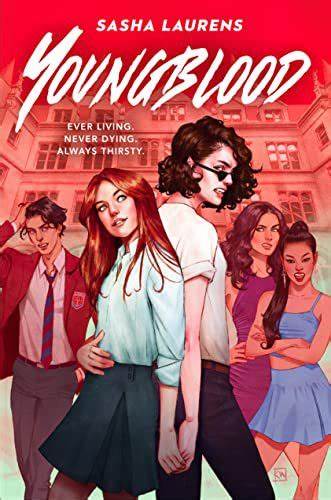
Youngblood

*****

High school sucks. Especially for the undead.

When Kat Finn arrives at Harcote, she’s in uncharted territory. She is suddenly thrust into the alluring world of elite vampires – and her fortune is about to change.

Taylor Sanger is tired of the vampire world’s out-of-touch views, especially as an out-and-proud lesbian. She’s willing to fly under the radar for two more years at Harcote, but Kat’s arrival changes everything.

Kat and Taylor were once best friends. It didn’t end well.

A horrifying discovery means they have to set their differences aside and investigate the deep secrets at Harcote and the conspiracy underpinning all of Vampiredom.

As they investigate, will their old friendship be rekindled into something more?

*****

  I’ve always had a soft spot for vampire fiction. I fell in love with the concept when I first watched the Carmilla webseries on Youtube as a teenager (I highly recommend this). My love of vampires is why I picked this book up, and unfortunately, I regretted it. I should have looked at the reviews before I bought it, because I feel like I wasted money on a book I heavily disliked.

 Kat Finn is a vampire. This is pretty much the first thing we learn about her. She lives separately to vampires except for her mother. Their finances are strained, which makes feeding difficult for them. The reader soon learns that a horrible disease, CFaD has broken out within humanity and will kill any vampire that drinks from an infected human in a matter of minutes. The enigmatic Victor Castel – founder of CasTech – has developed a blood substitute called hema, which means that vampires can survive without the threat of drinking infected blood.
  Kat has dreamed about attending Harcote, a boarding school for the elite vampire youngbloods – vampires who were born after the CFaD outbreak rather than turned. When Kat receives her acceptance email, she is overjoyed, and she is also shocked when she learns that an anonymous benefactor has funded the two years she’ll spend at Harcote.
  She soon arrives and integrates herself into the culture of Harcote, making new friends and meeting old friends. Her ex-best friend, Taylor, is also attending Harcote, and the two end up sharing a room. Slowly, they begin to repair their broken relationship, but a death, a conspiracy, and the mysterious Victor Castel seem hellbent on getting in their way.

  ‘Youngblood’ is 405 pages long (my copy is, at least), and I don’t think it should have been that long. The first 250 pages follows life at the Harcote boarding school and, while the reader gets hints at the main plot during this, the plot doesn’t actually seem to begin until over the halfway mark when a secondary character’s body is found by Taylor. This still does nothing to fully begin the plot. Instead, we spend (in my opinion) far too long learning about the relationship between Kat, and Galen, her boyfriend. I am not against reading books which feature straight people or straight couples, but when a book claims to be sapphic, I have no desire to read about men. Their relationship – to me – was unnecessary, and seems only to have been included to try and make the reader wonder who Kat will choose by the end of the book (it was obviously going to be Taylor).

  The pacing problems continue throughout the book, with the plot reaching a head and concluding within the space of maybe 20, 25 pages. For a book of this length, it felt as though it was rushed. We find out with only about forty pages left that CFaD was created in a lab by Victor Castel in an effort to force vampires to live together in Vampiredom and rely on him to feed – he did, after all, create the blood substitute vampires use to sustain themselves. From here on out, things happen quickly, but the plot seems half fleshed out. Kat manages to manipulate Victor into admitting everything and records it on her phone, although the reader learnt only a couple of chapters ago that Victor has been a master manipulator since before Kat was born. How is it possible that this intelligent man could be tricked so easily by a teenager? Things only get worse when Kat and Taylor play his confession to an auditorium filled with vampires who have been directly affected by Castel’s actions. Despite the 400 pages of build up, we never actually get to know what happens to him. The last time we see him, he has his hands pinned behind his back and an army of angry vampires surrounding him, but we don’t see what happens to him. Do they kill him? Do they put him on trial? We don’t know. We don’t even get an explanation from Kat in the last chapter. His fate is an unsatisfying mystery.

  The characters are deeply unlikeable, and I doubt I will be reading anything else from this author. She insists on making Kat – a white, straight(ish) girl – the only person who cares about the lack of diversity at the school, and the only one who cares when Taylor’s identity as the only queer student at Harcote is used as an insult. Both of these things could have easily been left out of the book and not changed anything about the plot or the characters. One of the teachers at the school tells Taylor: “I have lived ten times the years you have. Do you really think I cannot comprehend homosexuality?” My only question is this. If that’s the case, then why is queerphobia such a big part of this book? If the vampires are well aware of the existence of homosexuality, then why is this not shown anywhere in the book? Even Kat – who calls herself the Token Ally – freaks out when she first starts to question her sexuality. There is so much queerphobia and bigotry that it made me feel sick.

  The worst part is when Kat and Galen are researching CasTech in the school’s underground library. Galen, who is half-Indian, tells Kat how his parents met. His mother is from a Gujarati merchant family, and his father was ‘involved’ in the East India Company. When Kat brings up the colonization of India (which was very white savior of her), Galen says that his parents relationship isn’t as “messed up as it sounds”. He explains that his father didn’t kidnap his mother, and that his father pursued her for years until she agreed to marry him (which is horrific behavior).
  This whole paragraph made me (a white person) deeply uncomfortable, and I have read many reviews of South Asian readers saying the same. It was not necessary to the story, and Galen being biracial is never mentioned again. It should not have been put into the book. The author tries to romanticize the colonization of India, and this is not OK. What Britain and the East India Company did to the country and people of India was nothing short of abhorrent, and it should not be spoken of in this way. If you’re going to put POC characters into your books, at least do them the courtesy of speaking the truth and not romanticize the horrors their countries and cultures have been subjected to.

  I could go on and on about how much I disliked this book, but this review already feels too long (it’s also enraging me that this was even written or published). To cut it short, I do not recommend this book. There is so much vampire literature out there, and I will do my best to find the books with actual good representation, instead of whatever the hell this book was.

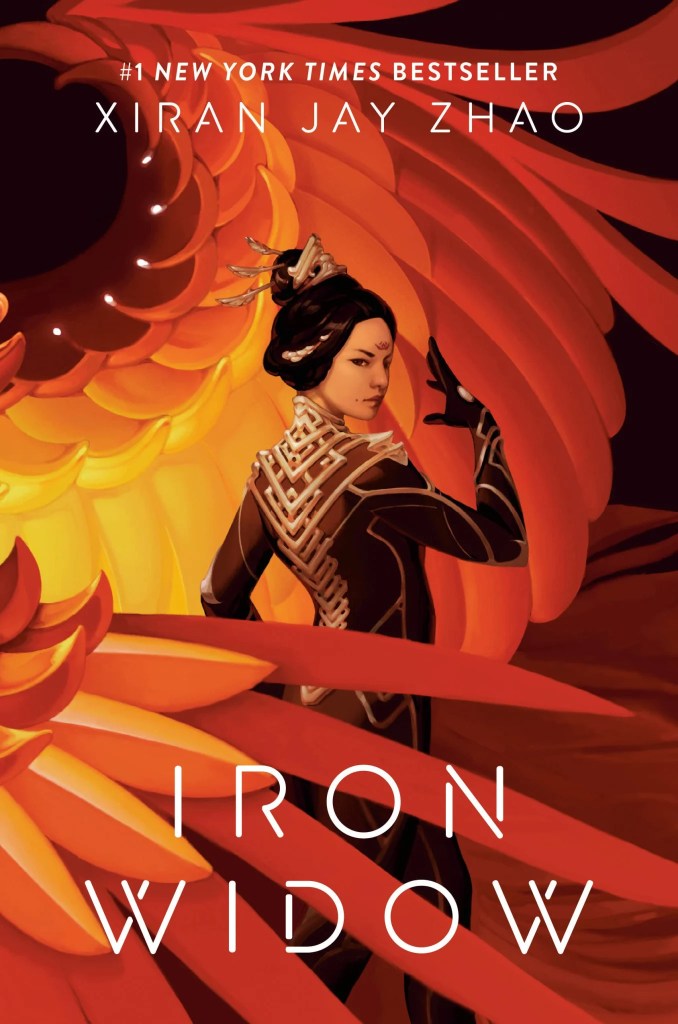
Iron Widow

I would like to preface this review by saying only this: I should have waited to read this book until the sequel, “Heavenly Tyrant” was out. I finished it and immediately longed for more.

Xiran Jay Zhao’s (they/them) debut novel exceeded all of my expectations. The world building was fantastic, the characters were flawed but still likeable, and I loved the story more than I thought I would. I tore through the book in three days, and I desperately wish I’d managed to read it in one sitting. “Iron Widow” is a book that I didn’t want to put down, and I stayed up late to finish it. The mix of fantasy, sci-fi and Chinese mythology made the book one that I couldn’t bring myself to put down.

Set against the backdrop of a medieval China, humanity must battle the bug-like alien Hunduns who threaten the humans way of life and safety. Using husks of dead Hunduns, the humans create Chrysalises, giant, formidable beings made of spirit metal. The Chrysalises must have two pilots – a boy and a girl. The pair join their qi (the vital life force of any living being) to battle the invaders. The male pilots are turned into celebrities by the dystopian public, while the girls are mere sacrifices for the boys, rarely surviving the battles they face unless them and their male counterpart are a Balanced Match.

That is, until Wu Zetian, a young girl who wants nothing more than to avenge the death of her sister at the hands at one of the government’s star pilots, Yang Guang. When inside the Chrysalis in her first battle with him, she unintentionally kills him, becoming the titular Iron Widow.

As punishment for the murder of their star pilot, Wu Zetian is forced to work with Li Shimin, a fellow murderer and the man who holds the highest spirit pressure in over 200 years. The two must learn to work together to pilot their Chrysalis, the Vermilion Bird, to secure victory for humanity. They face many challenges – pilots who hate them both for their murders, a corrupt government, and the appearance of Gao Yizhi, Wu Zetian’s ‘friend’.

In so many YA novels, the main romance turns out to be a love triangle in which the female main character must choose between two boys, each with their own flaws and merits. Xiran Jay Zhao ignores this completely, choosing to incorporate polyamory into the novel in an expert way. Wu Zetian finds herself in love with both Li Shimin and Gao Yizhi, but doesn’t choose between them, instead choosing both of them. The men’s bisexuality helps with this, and I loved the line where they first kiss and Wu Zetian is wondering if “this is finally happening”. If I had one complaint, it would be that the romance between the three needs to be developed a tiny bit more (but I guess I’ll have to wait until “Heavenly Tyrant” for this).

“Iron Widow” is the epitome of ‘female rage’. Wu Zetian’s hatred of the patriarchal society she is forced to live in makes the story seem to come alive, and the feminism in the novel was immaculate. I found myself relating to Wu Zetian, and found myself almost cheering when she finally broke, letting all of her rage out freely.

The plot twist at the end of the book had me staring at the ceiling long after I’d finished reading. After the final battle, Gao Yizhi finds documents which tell him that the Hunduns aren’t the invaders. Humanity is. As this is revealed, Wu Zetian is faced with a choice from the Heavenly Court: keep the truth to herself and do the bidding of the gods, or die.

I cannot wait for “Heavenly Tyrant” to be published. I truly loved this book. Everything about it spoke to me in a way I wasn’t expecting, and I highly, highly recommend picking up a copy if you have a chance.

Buy it here!

Gay’s the Word

Waterstones

bookshop.org

Our Wives Under the Sea

I have to admit that when I heard of this book, I had no idea what it was about. I saw it in my favourite bookstore (Gay’s the Word in London), and I immediately knew that I wanted it. I didn’t look online to see what it was about; I prefer to be surprised. Of course I heard good things about it, and I was excited to start it. Long story short: it lives up to the hype.

I think the thing that drew me to the book was originally the cover, and then the premise of ‘came back wrong’ that is so prevalent in this book. That particular trope has always intrigued me, and I was excited to see it in a sapphic book.

The story follows Miri and her wife, Leah. Leah, a marine scientist, has recently returned from a disastrous submarine expedition. She was originally supposed to be gone for only three weeks. Something went wrong, and Leah was gone, trapped at the bottom of the ocean, for six months. Miri had given up hope of her wife ever returning, so when the mysterious Centre, Leah’s employer, tells her that Leah has returned, she’s ecstatic at the thought of having her love back with her.

But Leah came back… wrong. Whatever Miri was expecting to find, it was not what greeted her. Leah no longer has any interest in movies, one of their favourite things to do together, and rarely speaks. When she does, her words are always about the sea, while giving nothing away about what happened, and Miri doesn’t want to ask. As the story progresses, we see the extent to which their relationship has changed from the early days of their love story, with small tidbits of information given to us as Miri reminisces on how the two met.

The dual POVs of Miri and Leah tell the story in an artful way which I loved. Julia Armfield switches between the two for the entirety of the book, and we slowly begin to learn more about the couple and what exactly happened to Leah on the expedition.

While Miri’s chapters tell us of the aftermath and the changes she sees in Leah, Leah’s chapters slowly tell us about the way the submarine simply… stopped working, sinking into the ocean before coming to rest on the bottom. Leah and her crew members have no way of knowing what went wrong or how long they’ve been down there, and she tells us how it affects them in such a way that I couldn’t put the book down. I desperately wanted to know what happened.

By the end of the book, I still wasn’t entirely sure what happened. Was it cabin fever? Was it a strange form of evolution which made Leah unable to survive outside of the sea? Or was it something more sinister; she tells us how her crewmate begins to hear a voice down in the dark of the ocean. The not knowing exactly what happened enthralls me, and I truly believe that I will re-read this book in the future.

Our Wives Under the Sea is unlike any horror book I have ever read (and I’ve read a lot). It is both a horror and a love story, the ending bittersweet as Miri releases Leah back into the sea. The book made me laugh as Miri tells us of the early days of their relationship, and made me cry as she realised that saving – or fixing – Leah, was an impossible task.

Ultimately, this is a book I’m happy I bought, and has secured it’s place as my first 5 star read of 2024. I highly recommend picking up a copy of this masterpiece.

Buy it here:

Gay’s The Word

Waterstones

bookshop.org

Experience

Alina let out a breath as she skidded to a stop, her arm reaching up to grab her sword from the scabbard on her back. The hiss of metal against leather was familiar now. It reminded her of the fights she’d had to go through to get here. It reminded her of the friends she’d lost. It reminded her of everyone who had left.
She hadn’t meant to push them away. She’d been so wrapped up in her fate and her struggles that she hadn’t even stopped to think of asking for help. By the time she realised she needed her friends, they were already gone. They’d given up trying to get her to see she needed them, and now she was alone.
She gripped her sword tightly, her other hand on the dagger at her hip. She looked across the field to the army in front of her. At the front, in the vanguard, stood Chesca, her eyes trained on Alina, the hint of a smirk on her lips. The sight of Chesca used to make the hair on Alina’s arms stand on end, but they had battled enough now that Alina was no longer scared. She was just… tired. She wanted to be done with all of this. She wanted her friends back. She wanted her life back. And she wanted the chance to grow old with Tamzin without the fear of someone hunting them.
“On your own, Alina?” Chesca called coyly, her smirk growing as she held her arms out to her sides, “You expect to defeat us?” Alina sucked in a breath, her fingers tightening around the sword at her side. She gave a small nod, her face blank with steely determination as she adjusted her stance. Chesca rolled her eyes, almost seeming bored, and raised her arm. Her army rippled around her, waiting for her command. They were restless, it seemed. Alina recognised a few of them. Not by name, but by faces. She remembered their faces smiling down at her while they killed her friends. Rage began to build in her chest, and a muscle in her jaw twitched as she prepared for the onslaught.
She knew there was no way she could win. Not on her own. But if she could somehow get close to Chesca, she hoped she could get rid of her enemy once and for all. One quick blow and she could die happily, knowing that she had defeated her foe.
A movement caught her eye, and Alina turned her head slightly, her eyes straining in the waning sunlight. On the outskirts of the army, where the field gave way to forest, there was someone hiding in a tree. It almost looked like… Malthus. Alina sucked in a breath as his eyes caught hers. He bowed his head, and she bowed hers, thankful that, even as she prepared for death, she had one friend with her. Slowly, more movement stirred, unseen by the enemy army. It surrounded them on all sides, and Alina felt herself choke on unshed tears as she saw her friends. Damon, Rina, Clerk, Mage, Tamzin. The tears fell as she saw her friends and the woman she loved. They were here. They had come back. She bowed her head to hide her tears, and once she had calmed herself, she raised it, meeting Chesca’s eyes with a hopeful stare. If Chesca knew Alina was crying, she didn’t mention it. Instead, she brought her arm down, and the army let out a roar, almost as if it was one large creature. They charged, running towards Alina. She drew her sword up and unsheathed her dagger, determined to cut through as many of them as she possibly could. Her feet began to move, faster and faster, until she was running towards the army, a lone warrior against a massive horde. They met in the middle of the field, and Alina gave a wordless yell as she began to attack, feeling the blade of her sword sink into the flesh of the closest enemy even as her dagger embedded itself into the eye of another. Ripping her weapons away from the dead, she continued on, slashing at everything that moved. It was easier than she thought it would be, and it was only when she heard the sound of arrows above her that she realised that she wasn’t alone in fighting.
The army was drawn in all directions as the attacks came from the sides. Turning to where she’d seen Malthus in the tree, she saw the army of Kraznok leap from the treeline, racing towards the field, and when she turned to the other side, she saw Tamzin leading the Ghamchain into the battle. Her heart soared even as she cut down another enemy, thankful that she had not been so stubborn that her friends had forsaken her completely. A slurry of screams sounded from the back of the enemy army, and she could only assume that Mage had managed to persuade the Treplan army to join the cause. She ducked under the swing of an axe, slicing at a nearby foe as she tried to find Chesca in the horde. Chesca was hers to kill, and she intended to let the woman meet the friends she had ordered killed. On she fought, ducking and killing her way through the onslaught. Chesca’s army had seemed big, but now that there were three armies against one, it didn’t seem that large. A pile of bodies was beginning to grow, and as Alina watched more and more vanquished foes join the pile, she saw Chesca climb to the top, spear in hand, her flaming red hair making her stand out. Alina began to run faster, her legs screaming with effort.
She let out a yell as she felt sharp pain sprout in her right shoulder as she was thrown to the ground. Before she could tell what was happening, a man was on top of her, slashing at her with a curved dagger she quickly recognised. She raised her hand and gripped his wrist, putting all of her strength into keeping the dagger raised. She knew the man, she realised. He had been the one who had snapped Halda’s neck in the forest. She felt a pang of rage as she mourned her dead friend. The girl had been young, and she didn’t deserve to die at the hands of this man. Alina’s mind became flooded with memories of the girl as she fought, struggling underneath the man. He was bigger and stronger than she was, and her strength began to falter, the dagger drawing ever closer to her face. She gritted her teeth, praying that she wouldn’t die this way. Her prayers were quickly answered as an arrow struck the man in the temple, driving into his brain. He toppled over, and Alina sat up, gasping for air as she pushed him off her legs. She didn’t waste any time before continuing her journey to Chesca, weaving her way through the fighting.
She soon reached the bottom of the pile of bodies, stacked high, the grass below soaked with the blood of hundreds of fallen soldiers. Staring up, she saw Chesca atop the pile, ordering her army. Alina sheathed her sword and began to climb, using the dead’s limbs to make her way up to her nemesis. Chesca saw her climbing, and for a moment, just a moment, Alina could have sworn she saw a hint of fear in the other woman’s eyes. It was gone quickly, and Chesca began to jab at her with her spear. Alina hissed in pain as it grazed her forehead, and when she next brought her arm up to climb, she grabbed the end of the spear, pulling it downward. The force of the tug made Chesca lose her balance, and both spear and woman toppled over the edge, landing on the blood-soaked ground below. Alina wanted nothing more than to climb back down and finish the job, but others were climbing the tower now, and not all of them were friendly. She hoisted herself to the top and stood, drawing her sword once more. The pain in her shoulder had settled to a dull throb, but she could still feel the warm blood spilling out of it slowly.
As the enemy soldiers reached the top of the pile, Alina readied herself, raising her sword. A hand touched hers, and she wheeled round, ready to strike. She froze as she saw Tamzin, a shy smile on her face. The blonde was bloody, with cuts on her face and arms, but she looked mostly unhurt. Alina felt her heart soar as she looked into the face of the woman she loved; they had been separated for over a month now, and Alina didn’t think she could bear to be away from the other woman for much longer.
“Hi,” she croaked, her voice catching in her throat. Tamzin smiled softly for a moment before the look fell from her face. She tugged Alina behind her, swinging her sword at the enemy who had been stood behind the brunette, ready to strike. He fell, falling backwards to the ground. Alina looked around. The enemy was climbing the pile from all directions, and she turned so that she and Tamzin were back-to-back. Together, they fought, their blades shining in the faint light of the sunset. They cut down enemy after enemy, and soon, others joined them as they managed to climb. Mage and Rina fought side by side with the women, and soon all four directions were clear. The battleground was suddenly quiet, and Alina felt warmth in her hand. She looked down, not even noticing that Tamzin’s hand had intertwined with her own at some point during the fighting. She turned to face her love, and the two stared at each other for a moment, swords lowered. Next to them, Mage and Rina celebrated the victory, but the women didn’t notice them. They only saw each other. Tamzin raised her hand and rested it on Alina’s cheek, bringing their foreheads together, and Alina closed her eyes.
“I missed you,” she murmured, her voice low, “I didn’t know if I’d ever see you again.” Tamzin let out a soft chuckle.
“I will never leave you,” she whispered, bringing their heads closer. Their lips touched, and Alina felt herself melting into Tamzin’s embrace. She hadn’t noticed how tired she was, but now that the fighting was done, she could barely stand. The two pulled apart, and Alina opened her eyes, smiling widely at her love. All thoughts of Chesca and the battle had been leeched from her mind, and all she could think about was the woman who stood in front of her, resplendent in blood covered and scratched armor.
“Alina!” Tamzin screamed at the same moment Alina felt pain blooming through her. She let out a gasp and wheeled around, grabbing her dagger from the scabbard on her hip, driving it upward into Chesca’s throat. The redhead stumbled backward, clawing at her throat as crimson blood began to pour out. Her eyes were wild and scared, and for a second, Alina almost felt sorry for her. Almost. She watched Chesca as she fell to her knees, still clawing at her throat, and she watched as the woman fell, one more body on the immense pile.
“Alina,” Tamzin cried, her voice urgent, “Alina please…” Alina looked down at her body, surprised to see the tip of Chesca’s spear sticking out of her chest, covered in fresh blood. Her blood, she realised. Her vision began to blur, and she felt herself falling. Tamzin caught her as she fell, wrapping the brunette in her arms as tears streamed down her cheeks. Everything was beginning to darken, and Alina forced herself to raise her head to look at the blonde. Their eyes met, and she smiled.
“I’m glad I got to see you one last time.” she whispered, reaching out with a shaky hand to tuck a strand of hair behind Tamzin’s ear. She drew in a deep breath, a smile on her lips, and then everything went black.